SolidWatts
How a CERN spin-off turned a decade of particle accelerator physics into a Series A investor deck.
1 deck · 7 days · Series A ready
Scope
Venture support
Stage
Seed → Series A ready
Timeline
April 2026
The brief
Markus Aicheler spent ten years at CERN building RF systems for particle accelerators. When he left, he took the technology with him and started asking a different question: what if solid-state RF chips could replace the gas furnaces powering European industry?
SolidWatts had the technology, the revenue, the pilots, and a strong founding team. What it didn't have was a story investors could follow.
The original deck
The first version told the technology story well. What it needed was a business story to go alongside it.
The technology was genuinely remarkable: 85% efficiency versus 25% for gas, modular from 1kW to 1MW, instant on/off, software-controlled. The technology deserved a clearer frame.
Reframing the story
The core reframe was moving from a technology pitch to a market timing pitch. Three things were happening at once: energy sovereignty climbing up the political agenda, the grid going electric, and solid-state technology finally ready for industrial scale. The timing hadn't been this good before.
Not just 'we built a better furnace', but why this technology, why European industry, and why right now."
The process
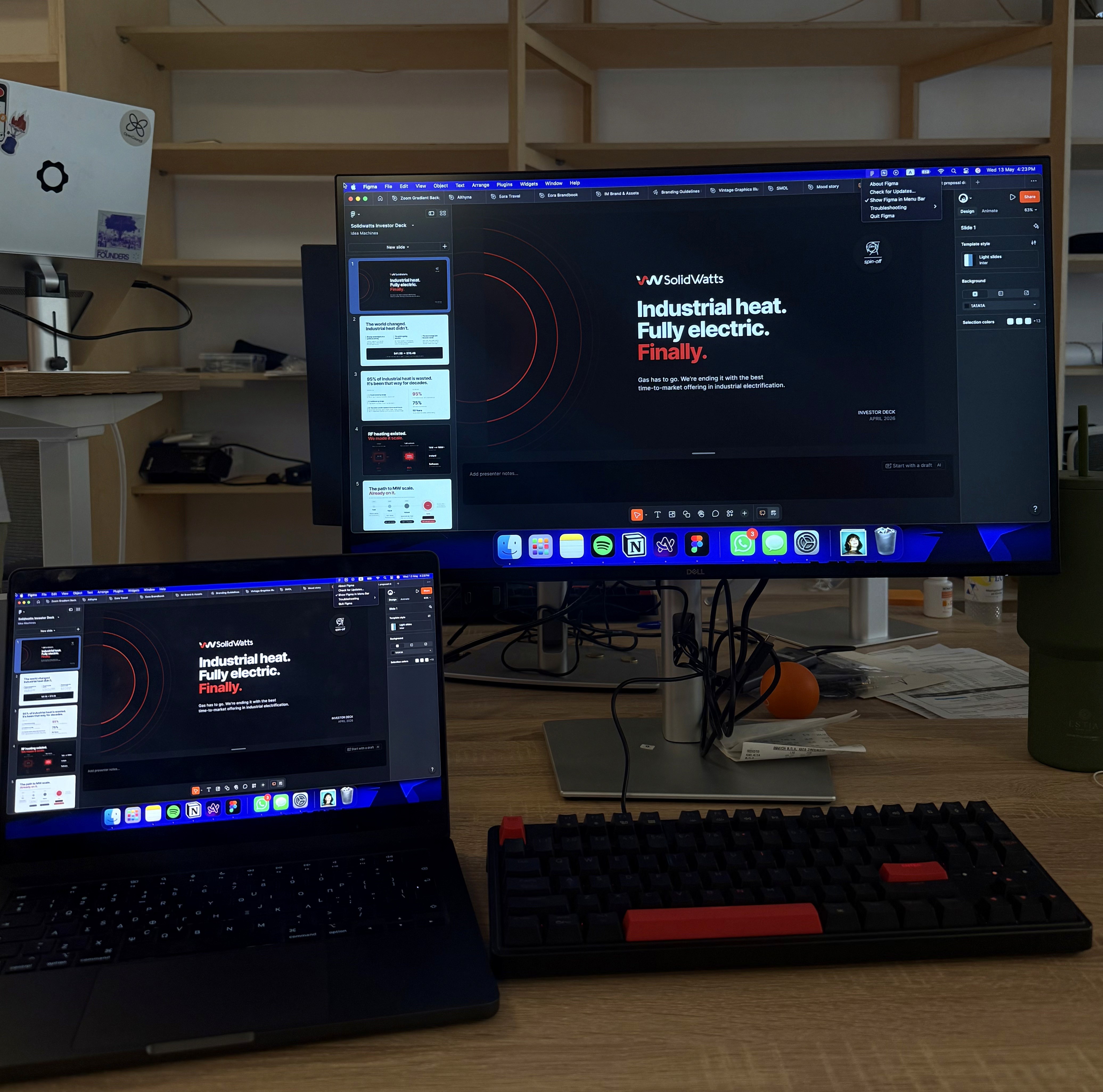
Over three rounds of feedback with the founders and their VC board member, we rebuilt the deck from the ground up: narrative, hierarchy, visual language, and content. That included a competitive landscape, financial framing across past and future rounds, a process intensification story showing what becomes possible at 1MW, and a full visual system built around the SolidWatts brand.
Where it landed
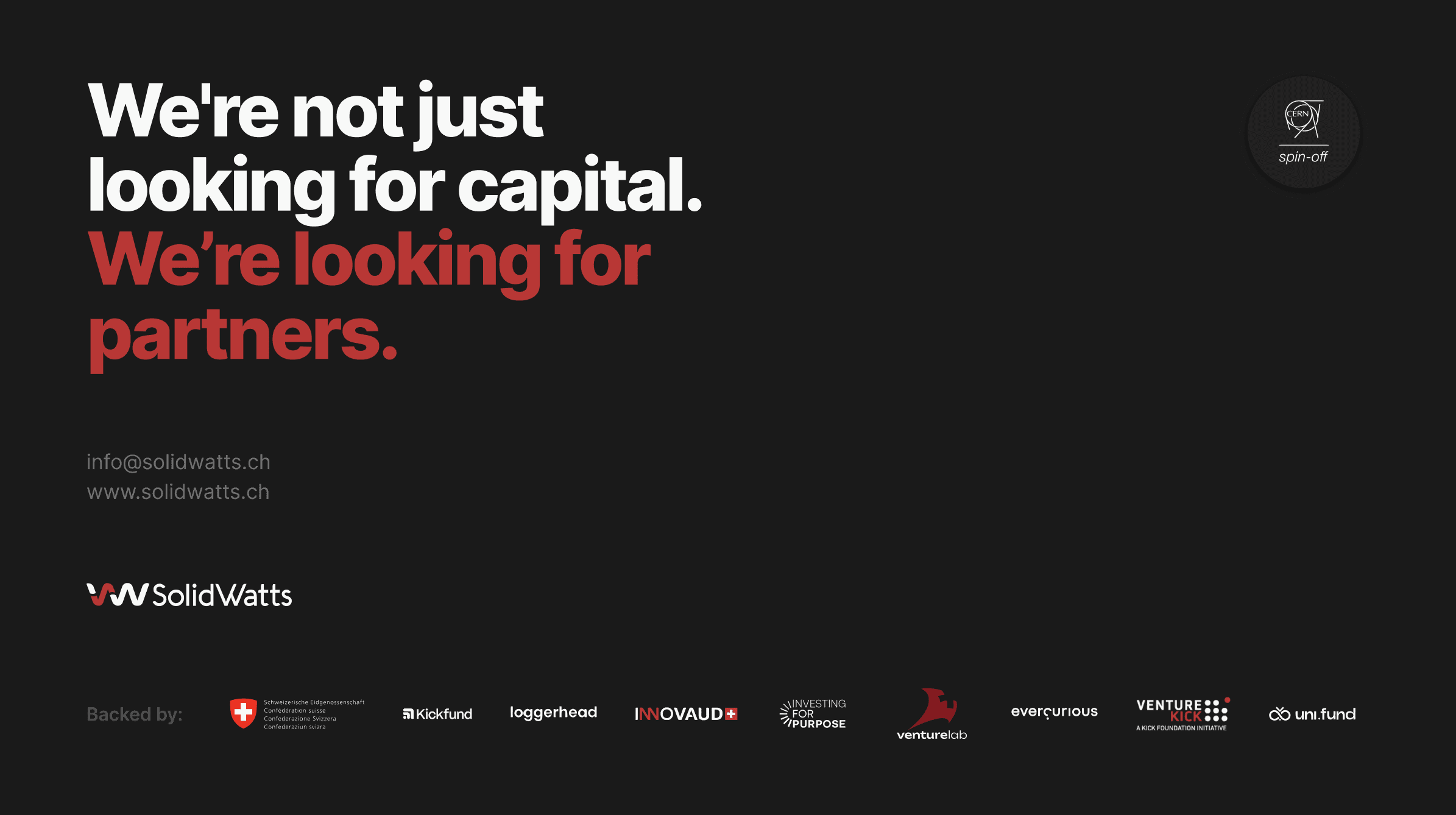
A 10-slide Series A deck, a competitive positioning map, a full design system, and a closing line that said what needed to be said: "Capital matters. The right partners matter more."
What SolidWatts proved
Deep tech doesn't have to hide behind jargon. The best investor story is usually the most honest one: here's the problem, here's why now, here's what we built, here's what this raise does.
The technology was always the strong part. We just helped the story catch up. And it happened in a week.