Astylab Founders 2025
An eight-week, full-time venture program that took 8 founders from 136 applications through problem exploration to 4 ventures, with one securing €100K in follow-on funding.
136 applications · 8 founders · 4 ventures in 8 weeks
Scope
Partnership program
Stage
0 -> 4 ventures formed
Timeline
Oct - Dec 2025
The gap
Greece doesn’t lack people who want to build things that matter. It lacks the structures to help them start. There are plenty of experienced professionals (like architects, conservationists, strategists, or designers), who care deeply about specific problems but have no obvious path to building. They’re not typical startup founders. They don’t have a pitch deck. They have a problem they can’t stop thinking about.
This was visible inside Astylab, Athens’s urban progress community. Over 2 years, Astylab had grown to 1,400 members: people who showed up to events, read the newsletter, cared about cities and social infrastructure. Many of them wanted to do more than participate. They wanted to build. But there was nowhere for them to go.

Astylab Founders was designed for these people. An 8-week, full-time program where participants paused or quit their jobs and worked side by side with a venture-building team to explore problems, test solutions, and figure out whether building something was the right next step.
The bet
The hypothesis was specific: if you give the right people structured time, a small community of peers, and hands-on support, they will move faster in eight weeks than most do in a year.
Astylab conceived the program and brought the community: the applicant pool, the network, and the credibility built over years of grassroots work. Helidoni Foundation backed the bet financially, covering microgrants and program delivery, with up to €100K in follow-on funding for ventures choosing steward-ownership structures. Stewards brought the governance and ownership frameworks. Idea Machines designed and ran the program: curriculum, facilitation, space, and daily support from a five-person team.
The cohort
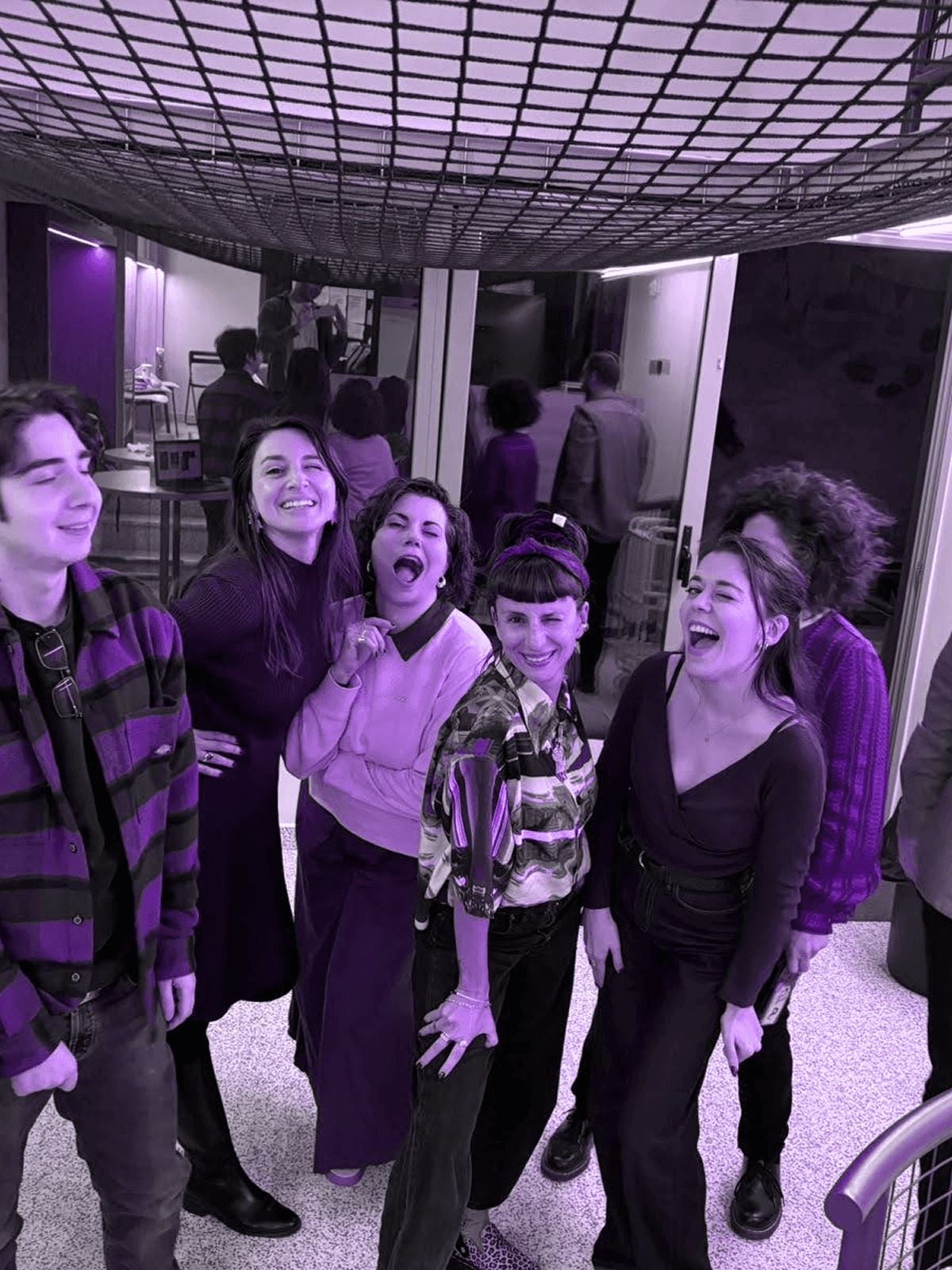
136 people applied. 8 were selected, with backgrounds in architecture, urban planning, conservation, mental health, arts and culture, brand strategy, and community organising. Average age: mid-thirties. None identified as “startup founders.” The cohort split roughly in half: early-career professionals in their late twenties who wanted to build something meaningful from the start, and experienced professionals in their mid-forties who wanted to scale their existing work or redirect their careers toward impact. Both groups had the same need: structured time and support to actually begin.
The selection criteria: problem-first thinking, moral ambition, collaborative instincts, and comfort with ambiguity.
What happened in 8 weeks
The first 2 weeks were fully structured: community building, shared language, impact frameworks, teaming experiments. The middle 4 weeks were mostly self-directed as founders drove their own research, user interviews, and experiments, with the team available in the room. The final 2 weeks converged on deliverables and Demo Day.
Four ventures were ready to launch with pilots and early customers:
Althyna: fall prevention and home-proofing for older adults (Giannis Iakovakis & Giota Kaltsa)
Oh My Days!: workplace period-care dispensers and menstrual equity (Nikoleta Rekatsina)
OSEK TUTU: a proximity platform for neighbours to meet in real life (Mary Patrikiou).
And Then We Talked (ATWT): facilitated workshops for important conversations based on selected art stimuli (Maria Sotiropoulou).
Three remained works in progress exploring participatory urbanism, culture, and social connection.
Althyna secured €100K in follow-on funding from Helidoni Foundation, the first venture from the program to receive institutional backing.
What was hard
The middle weeks were the hardest. Founders asked for clearer milestones during the self-directed phase. Some wanted more structure around team formation, meaning stronger facilitation so more people ended up in teams rather than working solo. The program heard this and will redesign both elements for 2026.
What founders said
Every founder scored the program 9 or 10 out of 10. NPS: 100. The two things they rated as most important: “connections I’ll keep after the program” and “sense of belonging to a group with a shared vision.”
In the skills self-assessment, the biggest jumps were in experimentation, communication, and using networks to move faster. Several founders said they now saw themselves as people who could start things, not just support other people’s projects.
What it proved
The first edition confirmed the core thesis: there is no shortage of people in Greece with moral ambition for impact-aligned work. The bottleneck is structured time, support, and community. Eight weeks was enough to move eight people from “someone should do something about this” to concrete ventures with pilots, customers, and funding.
The 2026 edition is in preparation with the same partners. Under Idea Machines, it becomes the flagship example of the partner-program model: Astylab provides the community and the pipeline, institutions fund and co-brand, Idea Machines designs and delivers, founders build.